
Tinned seafood from the Ría de Arousa: from raft-grown mussels to gourmet tins, seen from the boat
Tinned seafood from the Ría de Arousa starts on the mussel rafts around Vilanova: how it's made, which tins are worth buying and how to see it all on a skippered boat trip.
Open a tin of mussels in escabeche almost anywhere in Spain and there's a good chance that mussel grew hanging from a rope in the Ría de Arousa. We rent out our skippered boat from the port of Vilanova de Arousa and sail between those mussel rafts every day, and someone on board always asks the same thing: "So this is where the tins come from?" The short answer is yes. The long answer is this guide.
Here's where the ría's canning tradition comes from, how a good conserva is made, which tins are worth buying and how to combine it all with a boat rental in Vilanova de Arousa so you can see the source with your own eyes.
An estuary that lives from the sea… and the tin
The Ría de Arousa is the largest estuary in Galicia and one of the most productive shellfish areas in Europe. Fresh water from the Ulla and Umia rivers mixes with the Atlantic, and upwellings of cold, nutrient-rich water turn the ría into a huge larder. Fresh seafood, though, has one problem: it doesn't keep. That's how canning was born.
First came salting: for centuries sardines were salted and pressed in salting houses, many of them set up in the 18th century by merchants from Catalonia. In the late 19th and early 20th centuries the sealed tin with oil arrived, and the Galician coast filled up with seaside canneries. Today Galicia accounts for a large share of Spain's fish and shellfish canning industry, and the Ría de Arousa — with historic canneries on Illa de Arousa and in Vilanova, Cambados, O Grove and Vilagarcía — is one of its hearts.
What we love telling guests on board is that this isn't a museum piece: the industry is still running, and much of what goes into the tins comes from a few miles from where we cast off.
From sea to tin: how canned mussels are made
Mussels are the star. Here's the journey in short:
- Raft farming: ropes hang from the wooden platforms (bateas) you see floating off Vilanova and Illa de Arousa. Mussels take roughly one to two years to reach market size.
- Harvest: the raft farmers hoist the ropes with their boat's crane, then separate, clean and grade the mussels on board.
- Purification and cooking: ashore, the mussels are purified and steamed open.
- Shelling and grading: the meat is separated from the shell and sorted by size. Good tins state the piece count (from 8-12 up to 20-25 and more). Fewer pieces means bigger mussels.
- Frying and packing: in traditional conservas, the mussels are lightly fried before being packed by hand in escabeche (oil, vinegar, paprika, bay leaf and spices).
- Sealing and sterilising: the tin is sealed and sterilised. From then on, a good conserva actually improves with age, like a fine wine.
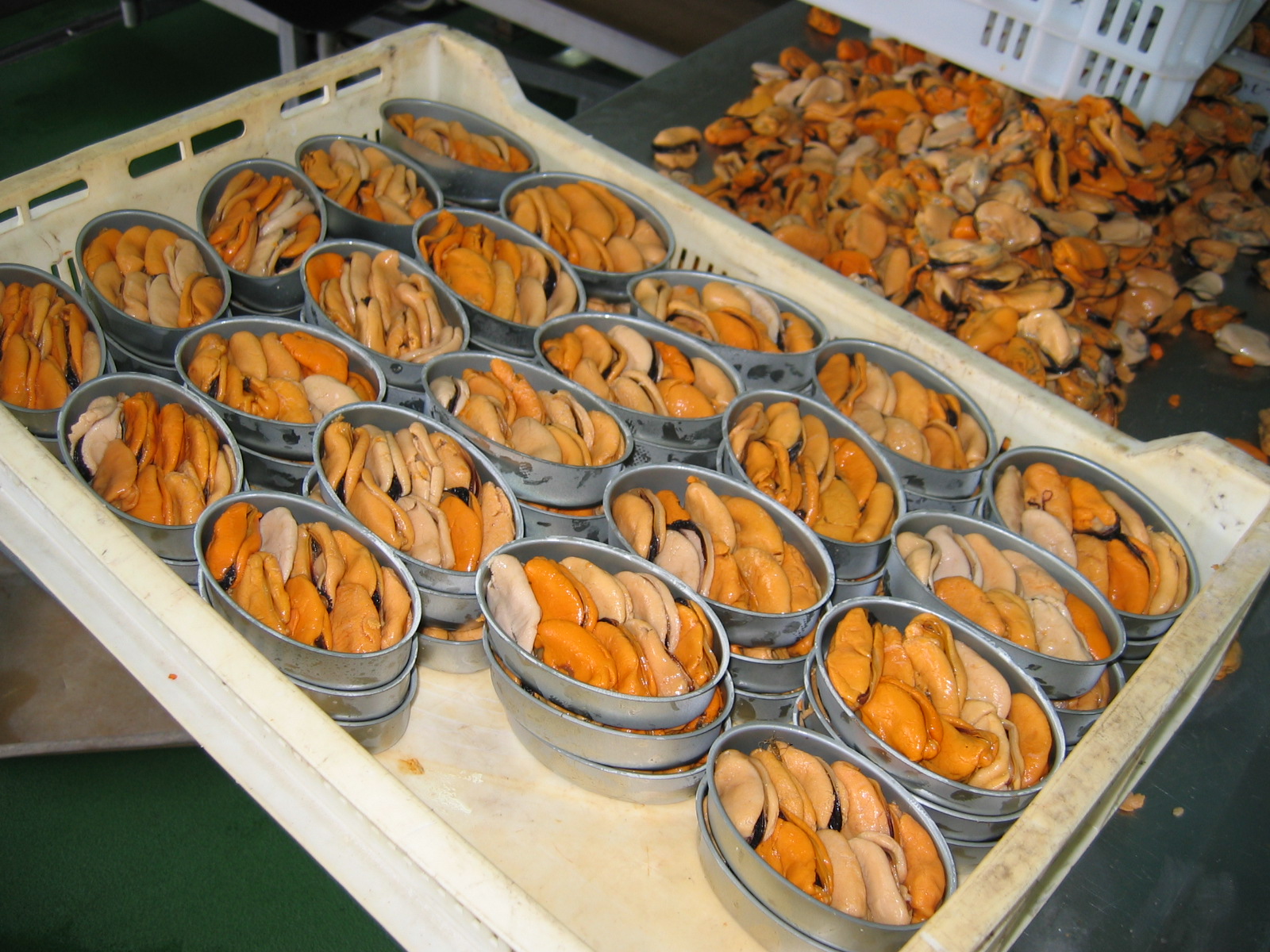
When we bring the boat close to a raft (always respectfully, never tying up to it: they're private farms), it's easy to picture the whole process. Many guests tell us they'll never look at a tin of mussels the same way again.
Which Ría de Arousa conservas to buy
If you want an edible souvenir that's the real thing, these are the tins we recommend (and the ones we keep at home):
- Mussels in escabeche: the classic. Look for Galician mussels, ideally carrying the Mexillón de Galicia Protected Designation of Origin.
- Cockles in brine: the ría is cockle country; in a tin, the bigger and fewer, the better.
- Queen scallops (zamburiñas) in scallop sauce: tasty and very local.
- Razor clams in brine: delicate, perfect with a squeeze of lemon.
- Octopus in olive oil or ajada: a nod to polbo á feira.
- Sardines in olive oil: the oldest conserva on the Galician coast.
- Clams and baby squid in their ink: less common, but excellent from artisan canneries.
How to spot a good tin
- Clear origin: it should say Galicia or Galician rías, not just "packed in".
- Piece count shown on the label.
- Olive oil (ideally extra virgin) rather than generic vegetable oil.
- Short ingredient list: seafood, oil, salt, vinegar and spices. Not much more.
- Sensible price: a gourmet tin of large mussels doesn't cost the same as a supermarket one — and it's worth it.
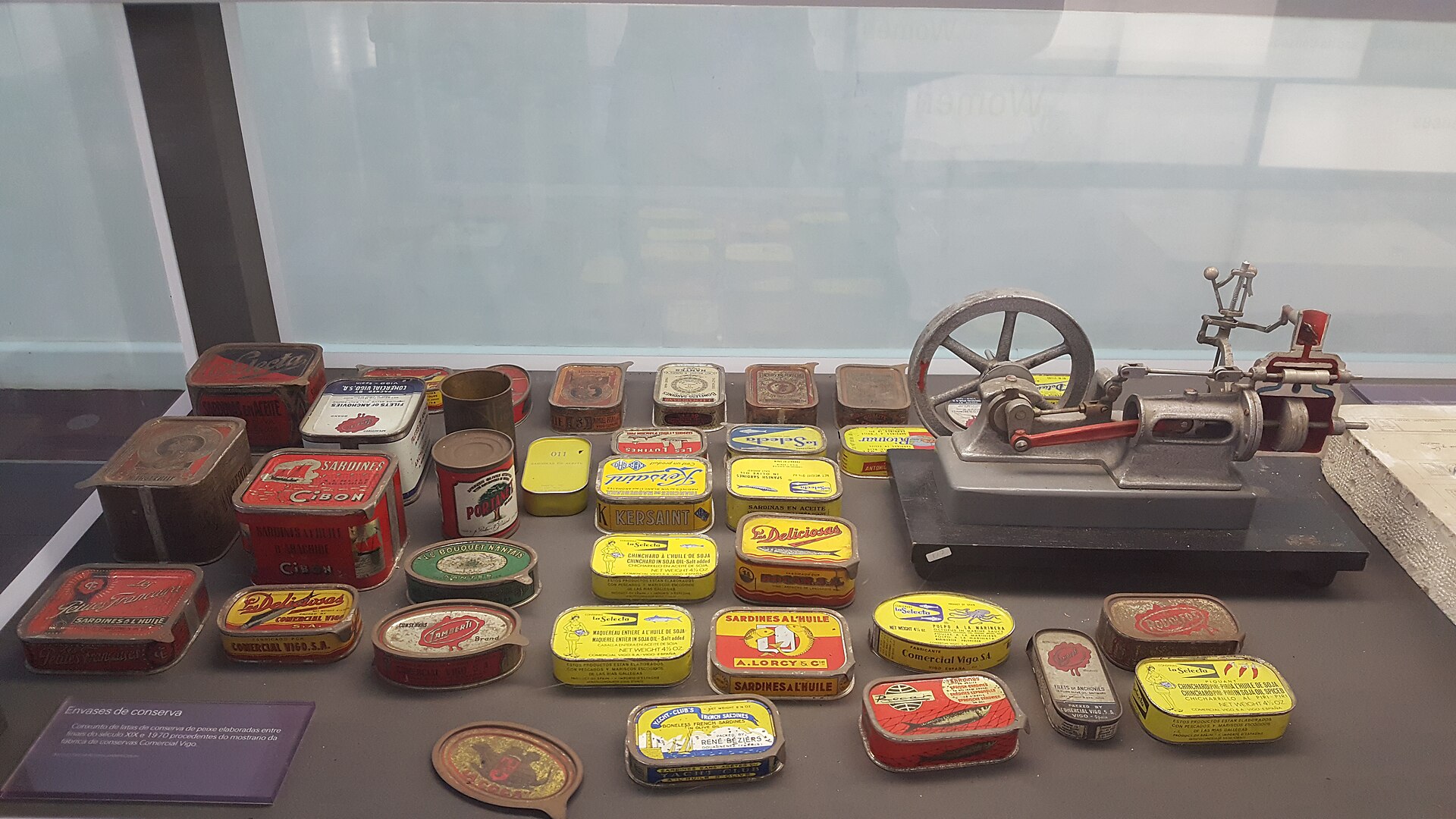
Boat route: mussel rafts, fishing harbours and tinned-seafood vermouth
This is the trip we suggest for anyone coming with a foodie mindset:
Half day (4 hours, €300)
- Depart from the port of Vilanova de Arousa and cruise gently through the raft fields, where we explain how mussels are farmed and, with luck, watch the raft farmers at work.
- Sail around Illa de Arousa, an island with a long seafaring and canning tradition, and head to the sandbanks of Areoso for a swim (in summer) or a stroll along the shore.
- On the way back we anchor for a vermouth on board: a tin of mussels, some cockles, Galician bread and a chilled Albariño. Yes, you're welcome to bring your own food and drink.
Full day (€500)
We add a run out to the Punta Cabalo lighthouse on Illa de Arousa and to the coast of Cambados or O Grove, where you can go ashore for lunch and pick up conservas at a local shop. You can also sail up the estuary along the Traslatio route, where tradition says the body of the Apostle Saint James arrived.
In both cases fuel is extra and depends on the route. A maximum of 6 guests plus the skipper, so everyone has room.
Ideas for a "conserva picnic" on board
We've seen plenty of guests' cool boxes over the years, and these combinations work best:
- Mussels in escabeche + crisps: the Galician aperitivo par excellence.
- Cockles + a few drops of lemon + Albariño: simple and unbeatable.
- Sardines in oil on Cea bread or broa cornbread.
- Octopus in oil with a pinch of paprika for those who can't wait for polbo á feira ashore.
- Tetilla or San Simón cheese to finish.
A practical tip: bring a tin opener just in case (most tins have ring pulls), napkins and a rubbish bag. We make sure nothing ends up in the water.
When is the best time for this trip?
Conservas have no season, but the ría does:
- Spring and autumn: ideal. Fewer people, beautiful light over the rafts and pleasant temperatures for eating on board.
- Summer: more activity on the water and the option of a swim at Areoso, but book well ahead.
- Winter: shorter, quieter trips, always depending on the forecast. A tinned-seafood vermouth in a warm jacket on a calm ría has a lot of charm.
Before every trip we check wind and tides, and if the weather won't cooperate we'll suggest another date. We'd rather do that than have you endure a rough day.
Quick questions
Can you visit a cannery? Some local canneries offer visits or have their own shop, but it depends on the season and the company. If you're interested, ask us and we'll point you in the right direction.
Can we climb onto a mussel raft? No. They're private farms and tying up or boarding without permission isn't allowed. We do get close enough for a good look.
Do I need a boating licence? No. You sail with a professional skipper; all you have to do is enjoy it.
Book your food-lover's trip on the Ría de Arousa
If you'd like to see where Galicia's best conservas come from and finish with a tinned-seafood vermouth and Albariño at anchor off Illa de Arousa, message us on WhatsApp at +34 685 74 24 20. We'll tell you which days are free and which route suits the forecast. Half day €300, full day €500, fuel extra. We depart from the port of Vilanova de Arousa.
Photos: Lameiro — CC BY-SA 4.0 and public domain; Aprofa — CC BY-SA 4.0, via Wikimedia Commons.
Ready to experience the Arousa estuary onboard?
Full day €500 · half day €300 · fuel extra. Book on WhatsApp and we confirm in under 4 hours.
Book by WhatsApp
Octopus from the Ría de Arousa: season, creel fishing and where to eat polbo á feira after a day on the boat

Scallops and queen scallops of the Ría de Arousa: season, where to eat them and how to see the ría by boat
