
Spider crab and velvet crab in the Ría de Arousa: the winter seafood season seen from the boat
Spider crab and velvet crab season in the Ría de Arousa begins with the cold: when it is, how they are caught, where to eat them around Vilanova and O Grove, and how to pair it with a skippered boat trip.
There is one phrase you hear in every harbour of the Ría de Arousa when November comes around: "agora si, xa hai marisco" – "now we're talking, the seafood is here". And people mean it. The cold brings the best time of year for two creatures that are almost a religion in Galicia: the spider crab (centolla) and the velvet crab (nécora). We rent out our boat from the harbour of Vilanova de Arousa, and every autumn we watch the ría change: fewer swimmers, more creels, more fishing boats heading out before dawn, and restaurants chalking "centolla de la ría" back onto their boards.
In this guide we tell you honestly, without the hype, when spider crab and velvet crab season is in the Ría de Arousa, how they are caught, how to spot a good one, where to eat them, and how to fit all of that around a boat trip on the ría.
When is spider crab and velvet crab season in Galicia?
The golden rule any sailor in Vilanova will give you: the months with an "r" in them, and above all the cold ones. Spider crabs and velvet crabs are protected in spring and summer, when they moult and breed. They cannot be fished during those months, and their meat is emptier anyway.
The fishing campaigns open between autumn and winter, usually between November and December depending on the species and the area. The exact dates are set every year by the Xunta de Galicia together with the local fishermen's guilds (cofradías). From then until well into spring, the seafood of the ría is at its best:
- Velvet crab: the campaign usually opens in autumn. It is the star of the Galician Christmas seafood platter, at its best from November to February.
- Spider crab: usually opens a little later and is enjoyed all winter long. Females carrying roe (the prized "coral") are the most sought after in December and January.
If you visit in summer and someone offers you "fresh Galician spider crab", ask questions. Chances are it is frozen or from somewhere else.
How they are caught: creels, guilds and the ría at dawn
One thing that surprises people who come out with us in autumn and winter is seeing the ría at work. Spider crabs and velvet crabs are caught with creels (nasas), cage-like traps baited and dropped to the seabed, marked with coloured buoys. You will see them lined up off Illa de Arousa, near Areoso and at the mouth of the ría.
The small-scale fishing fleet leaves Vilanova, O Grove, Cambados or Ribeira before dawn, hauls up the creels and returns to port to sell at auction in the lonxa (fish market). From our boat we explain how it all works: what the buoy colours mean, why you never touch someone else's creel, and how the ría combines fishing, shore shellfish gathering and mussel farming on the bateas (mussel rafts), which stay put all year round.
Let's be clear about one thing: we do not fish for shellfish and we cannot sell it. Commercial spider crab and velvet crab fishing is reserved for licensed professionals. What we do is show you the setting where it all happens – and then tell you where to eat it well.
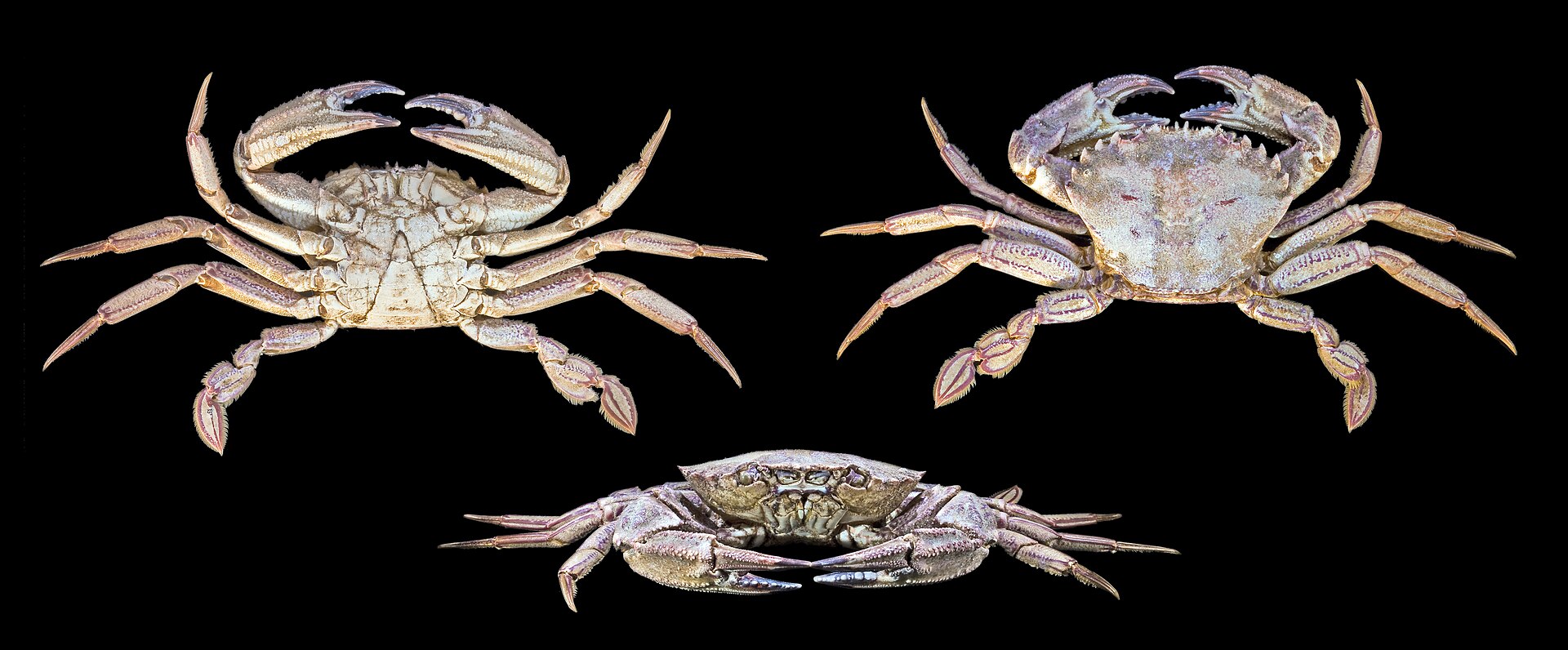
How to pick a good spider crab and velvet crab
Whether you are buying at the fish market or ordering in a restaurant, these tips will save you disappointment:
Spider crab
- It should feel heavy. Pick up two of the same size: the heavier one is fuller.
- Female or male. The female has a wider, rounder abdomen (the "apron") and carries the coral in winter. The male has more meat in its legs. In Galicia this is debated over coffee with the same passion as football.
- A shell covered in "seaweed" or marks. A spider crab that has not moulted for a while has a dirtier shell with algae and small growths on it. Looks bad, good sign: it is usually fuller.
Velvet crab
- Alive and feisty. The velvet crab is a nervous animal. If it is sluggish, that is a bad sign.
- Red eyes and a velvety shell. That is where its English name comes from.
- Females for flavour. Just as with spider crab, females with coral are the most prized.
Where to eat spider crab and velvet crab near Vilanova de Arousa
The big advantage of sailing from Vilanova is that you are right in the middle of the ría with the richest seafood tradition in Galicia. Less than half an hour away by car you have:
- Vilanova de Arousa and Illa de Arousa: harbour taverns and restaurants serving the day's catch, no frills. On the island, the O Xufre area has a long seafaring tradition.
- Cambados: the capital of Albariño, with seafood restaurants in the old town and by the harbour. Spider crab with a glass of Albariño from the latest harvest is probably the most Galician pairing there is.
- O Grove: the seafood capital. Its Seafood Festival is held in October, but November and December, with fewer people around, are when you eat best.
- Vilagarcía and Carril: famous for clams, but also with a good range of winter seafood.
Our advice: always book ahead and ask what came from the ría that day. Galician seafood is priced by the kilo and by season; prices soar at Christmas, so November and January are the best months to eat well without the bill giving you a fright.
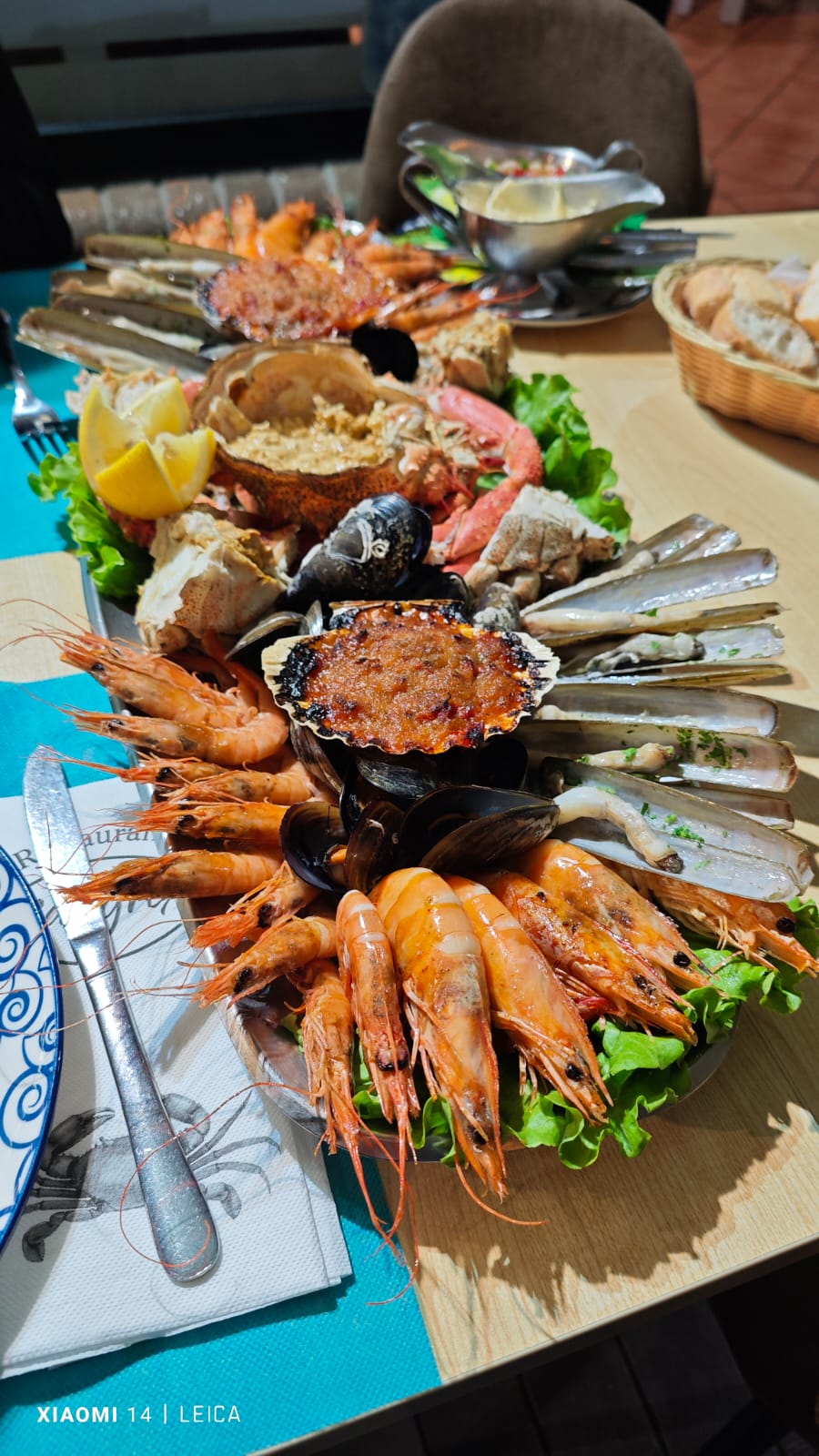
The perfect plan: boat in the morning, seafood at lunchtime
This is the plan we are asked for most in autumn and winter, and the one that works best:
- 10:30 – Half-day trip (4 hours) from the harbour of Vilanova de Arousa. We sail between the mussel rafts, pass the Punta Cabalo lighthouse, go around Illa de Arousa and, if the day allows, head to Areoso or towards Illa de Cortegada. You will see the creel buoys and, with luck, a boat hauling them in.
- 14:30 – Back in port and straight to the table. Ten minutes later you are eating spider crab in Vilanova or Cambados.
- A long lunch with Albariño and a stroll through the old town of Cambados or along the harbour.
If your group wants more, the full day allows a longer route (towards O Grove and A Toxa, or out to the mouth of the ría) with lunch on board anchored in a quiet cove, and the seafood feast in the evening.
A route steeped in history
While we sail we also tell you the story of the ría: the Traslatio, the arrival by sea of the body of Saint James up this very ría, now commemorated by the only sea-and-river route of the Camino de Santiago; the towers of Catoira, which defended the ría against the Vikings; and why Vilanova is the birthplace of the writer Valle-Inclán. You cannot understand the food of Arousa without all of that.
What weather to expect and what to wear in November and December
Let's be honest: in winter in Galicia, the weather calls the shots. In the Ría de Arousa in November and December you can usually expect 12-16 °C, crisp mornings, and rainy days alternating with days of brilliant sunshine and flat seas. The ría is sheltered by Illa de Sálvora and the O Grove peninsula, so with moderate wind it is very pleasant sailing inside.
We check the forecast and the tides the day before. If the day is not safe or will not be enjoyable, we don't go out and we change the date free of charge. For the trip, bring:
- Warm clothes in layers and a raincoat or windbreaker.
- A hat and sunglasses: the winter sun on the water is dazzling.
- Rubber-soled shoes.
- A flask of coffee or soup: it tastes wonderful on board.
Boat trip prices
Our boat is 8.5 metres long, comfortable and stable, with skipper included. We take a maximum of 6 people + skipper, even though it is certified for 10, because we want you to be comfortable.
- Half day (4 hours): €300
- Full day: €500
- Fuel extra, depending on the route.
The price is per boat, not per person. For a group of six, the half day works out at €50 each – less than you will spend on the spider crab. If you are looking for a special Christmas gift, a boat trip followed by a seafood feast is a present nobody forgets.
Book your boat-and-seafood day
If you want to experience spider crab and velvet crab season from the inside – on the ría where they are caught, with a local skipper who explains everything – message us on WhatsApp at +34 685 74 24 20. We will tell you which days look good, recommend where to eat based on what is coming into the fish market that week, and organise your trip from the harbour of Vilanova de Arousa.
Photos: spider crab, José Antonio Gil Martínez — CC BY 2.0; velvet crab, Didier Descouens — CC BY-SA 4.0; seafood platter, Agustín Riobó — CC0. Via Wikimedia Commons.
Ready to experience the Arousa estuary onboard?
Full day €500 · half day €300 · fuel extra. Book on WhatsApp and we confirm in under 4 hours.
Book by WhatsApp
Scallops and queen scallops of the Ría de Arousa: season, where to eat them and how to see the ría by boat

Octopus from the Ría de Arousa: season, creel fishing and where to eat polbo á feira after a day on the boat
